
The 2nd Consortium Meeting of the International Halosheep Project was Held at MAKÜ
Yapılış Tarihi | 07 November 2023, Tuesday

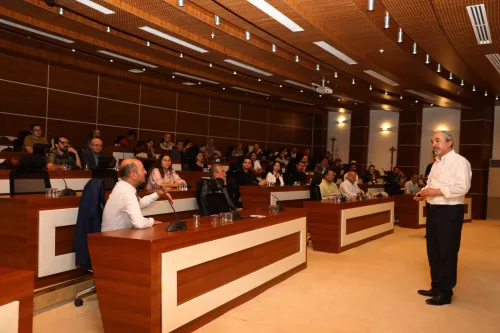
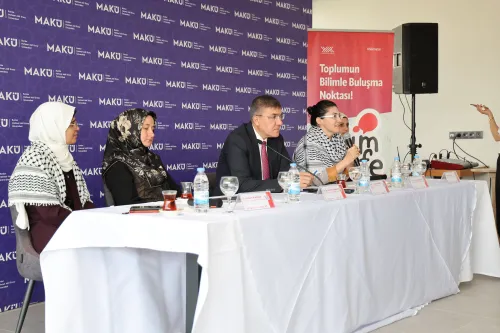
For the first time in Turkey, the "2nd Consortium Meeting" of the International Halosheep Project, which will calculate the carbon footprint in sheep-goat breeding, was held at Burdur Mehmet Akif Ersoy University (MAKÜ) Lavanta Tepesi Hotel.
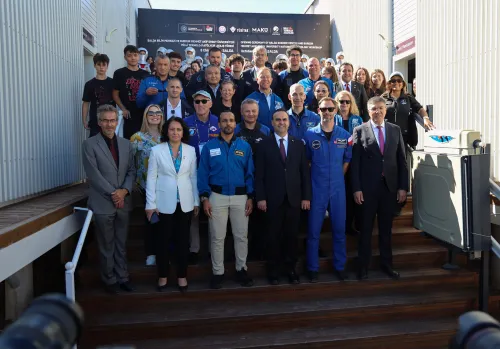
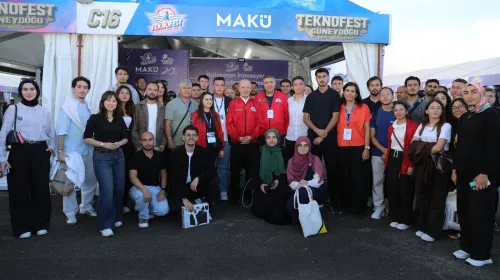
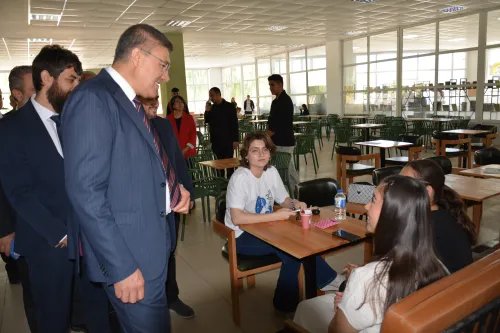
 The Halosheep Project meeting, which will last for 3 days and attended by project partners from 5 countries, was attended by MAKÜ Veterinary Faculty Dean Prof. Dr. Mehmet Çağrı Karakurum, President of the Chamber of Veterinary Surgeons Kazım Üstüner, President of Burdur Sheep and Goat Breeders Association Mustafa Yıldız, project executors, partners, academicians, and shepherds who took part in the previously conducted Shepherd Bridge Project.
 The Halosheep Project, which is at an international level, particularly examines alternative forage crops in sheep-goat breeding in terms of water scarcity, based on data related to changing climate. The project investigates the evaluation of plants that grow naturally in the dried lake area as forage crops that only sheep and goats can eat without incurring any cost.
The project is being carried out simultaneously in Turkey, Tunisia, Spain, France, Italy, and Greece. In the Turkish leg of the project, Burdur and Yarışlı lakes are included.
 The Halosheep project, led by MAKÜ Veterinary Faculty member Prof. Dr. Özkan Elmaz, supported by the European Union's Research and Innovation Framework Program "Horizon 2020" and TÜBİTAK International Cooperation Department (UİDB), was found suitable for support within the scope of the PRIMA (Partnership for Research and Innovation in the Mediterranean Area) program's 2021 Section 2 Agriculture Systems: Developing field applications based on agro-ecological practices to increase ecosystem services and biodiversity, adapt small farming systems to climate change, and increase farmers' incomes.
 Project Leader Prof. Dr. Özkan Elmaz stated that many parameters such as the evaluation of halophyte plants growing in salty soils as forage in sheep and goat breeding, which are known as the farm animals with the highest adaptation ability due to climate change, and the effects on meat yield/quality, milk yield, disease susceptibility, and animal welfare are being examined. "Within the scope of the project, pilot studies are being conducted on sheep-goat herds in the Burdur and Yarışlı lake basins in Turkey, the Kerkennah islands in Tunisia, and Greece. For the first time in Turkey, after evaluating all the data obtained from this project, it is aimed to calculate the carbon footprint in sheep-goats by Italian researchers. Within the scope of the project, researchers from 6 countries will evaluate the progress report of the project and conduct farm visits during the 3-day meeting in Burdur with the participation of our project partners, sector representatives, and shepherds." he said.
 In the project, joint studies will also be carried out with project partners on the importance of the animal, plant, human, climate, and soil approach for sheep-goat breeders.
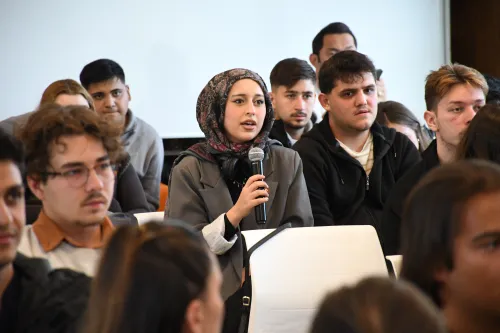
At the meeting, each country representative from the project partners made brief speeches and shared the developments of the project in their own countries.
After the meeting, a Halosheep logo painting processed on felt was presented to each country representative as a gift.