
Turkish youth does not lose hope despite difficulties: “Meaning and psychological resilience" stands out
Yapılış Tarihi | 22 May 2026, Friday

The results of the field research covering Turkey's 7 geographical regions, conducted between March and June 2025, revealed a multidimensional psychological portrait of Turkish university youth. The research includes significant findings in the areas of life satisfaction, psychological resilience, social ties, and the search for meaning.
“Young people feel caught in between”
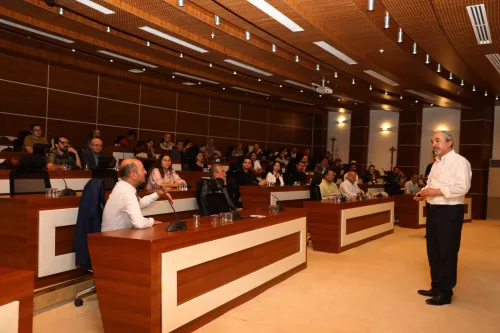
Prof. Dr. Gökmen Arslan, a faculty member of the Guidance and Psychological Counseling Department at Burdur Mehmet Akif Ersoy University and Director of the MAKÜ Happiness Research Coordination, made the following evaluations regarding their study:
“Young people are neither happy nor unhappy. This is the best sentence that defines the new generation. About two-thirds of the participants define themselves in this range. This shows us that young people are experiencing a state of being caught in between.”
Arslan stated that the research covers not only happiness but also many variables such as stress, anxiety, quality of life, and psychological resilience.
8 out of 10 young people find their lives meaningful
One of the most striking findings of the research is the strong sense of meaning and purpose among young people. While 56.2% of the participants evaluate their lives as “highly meaningful,” when combined with those who find it “moderately meaningful,” this rate reaches about 8 out of 10 young people. Experts emphasize that this strong sense of meaning is a fundamental axis that keeps young people standing in the face of economic concerns and daily stress. Additionally, half of the young people (49.5%) say they tend to help others and do good even under difficult conditions.
The generation that says “I did not fall”: Psychological resilience is strong
About 7 out of 10 young people (73%) believe that they can overcome the challenges they face and quickly recover from setbacks. Researchers evaluate that growing up in a period filled with intense pressure and chaos may have unexpectedly strengthened young people.
Contradictory table: Strong social ties, high feeling of loneliness
One of the most thought-provoking findings of the research is the contradiction in social relationships. About half of the young people (49.2%) state that they are satisfied with their social relationships, and a similar rate (49.5%) indicates that they tend to help others even in difficult conditions. However, 8 out of 10 young people feel moderate or high levels of loneliness; about 2 out of 3 young people do not feel a strong sense of belonging to the community they live in. Experts point out that young people are looking for deep and trust-based emotional bonds rather than a physical environment. These results indicate that relationships are superficial and emotional bonds are weak.
Campus makes them happier than the city
The connection between living environment and happiness also revealed a significant difference in the research: while the rate of those who are highly satisfied with the quality of city life remains at 15.7%, the rate of those who are highly satisfied with campus life reaches 36.2%. This finding clearly demonstrates the revitalizing effect of peer interaction and cultural activities on the well-being of young people.
Risk area: Stress and economic concerns
The alarming findings of the report cannot be ignored. One in two young people (50.7%) describes their daily stress level as high, while 73.1% express moderate or high concerns about their economic future. About 2 out of 3 young people state that they do not allocate enough time for hobbies and leisure activities. These data emphasize how critical it is to increase social, cultural, and economic support to unleash the potential of young people.
Four-layered happiness: Meaning, relationship, success, belonging
The MAKÜ Happiness Research Coordination summarizes the report with the following words: “The happiness structure of Turkish youth is based on four layers: meaning and purpose, social ties, personal progress, and social belonging. The strongest determinant, the sense of meaning, serves as a fundamental shield protecting young people against daily stress and economic pressure. The findings provide a concrete roadmap for policymakers and universities.”
About the Research
“Happiness and Life Assessment Research in Youth 2025” was conducted by Prof. Dr. Gökmen Arslan, Prof. Dr. Ali Murat Alpaslan, and Assoc. Prof. Dr. Seher Yastıoğlu from Burdur Mehmet Akif Ersoy University Happiness Research Coordination. The study was conducted quantitatively between March and June 2025 with the participation of 2,141 university students from 155 universities across Turkey's 7 regions.
Contact
Burdur Mehmet Akif Ersoy University Happiness Research Coordination www.makü.edu.tr