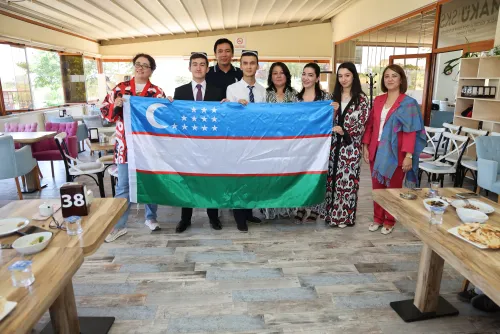

Microalgal biotechnology conference at MAKÜ: “The Journey of Science, Labor, and Entrepreneurship”
Yapılış Tarihi | 10 December 2025, Wednesday

Burdur Mehmet Akif Ersoy University (MAKÜ) Faculty of Science and Letters hosted a remarkable conference on the biotechnological importance of microalgae. In the event titled “From Laboratory to Industry; The Journey of Microalgal Biotechnology Science, Labor, and Entrepreneurship”, where Faculty Member Assoc. Prof. Dr. Füsun Akgül participated as a speaker, comprehensive information was shared on the scientific and technological value of algae from past to present.
In the conference, Assoc. Prof. Dr. Akgül, who presented a wide perspective from the historical use of microalgae to current biotechnological applications, provided significant insights to students about studies in this field. She stated that the aim of the event was to inspire the scientific and technological ideas of young researchers.
Emphasizing the place of algae in human history, Akgül reminded that there are archaeological and anthropological findings that communities living in Central America used spirulina thousands of years ago. She highlighted that during wartime, soldiers were fed with algae and that today NASA considers algae as astronaut food.
Touching on the critical role of algae in the history of the Earth, Akgül said, “We owe the formation of the oxygen we breathe today and the development of terrestrial life to algae. The fact that cyanobacteria were the first organisms to produce oxygen using water led to the accumulation of oxygen in the atmosphere, the formation of the ozone layer, and paved the way for organisms to move onto land. This great transformation is a process of approximately 3.5 billion years.”
Akgül stated that algae, which adapted to environmental changes in the history of the Earth, learned to produce very valuable metabolites in this process, and expressed that these metabolites hold high value in terms of today's biotechnology. She pointed out that algae, which have a wide range of uses, are present in many sectors from sunscreen products to health, cosmetics to feed and fertilizer production, wastewater treatment to carbon-capturing environmental projects.
Underlining that even some components used in sunscreens are algae-derived, Akgül stated that algae use light to capture carbon and produce organic and valuable biomolecules. She said that these molecules are utilized in many areas from fuel to fertilizer, health to cosmetics, and that microalgae are a low-cost, high-yield biological resource.
At the end of her speech, Akgül shared examples from their research on microalgae and spirulina, answered students' questions, and concluded the event.